
Cambodia and Laos sit side by side in South East Asia, yet they offer very different kinds of adventure. Cambodia pulls travellers in with the scale and drama of Angkor Wat, its temples, and a coastline dotted with quiet beaches. Laos moves at a gentler pace, built around river life on the Mekong, misty mountain plateaus, and hill tribe villages that have kept their traditions for generations.
If you are trying to choose between the two, you are not alone. Both countries reward curious travellers, but they suit slightly different instincts. This guide walks through what each destination offers, who each one tends to suit, and why many travellers planning a South East Asia trip find they do not have to choose between these two fascinating countries at all.
Cambodia at a Glance
Angkor, Phnom Penh and the Khmer Legacy
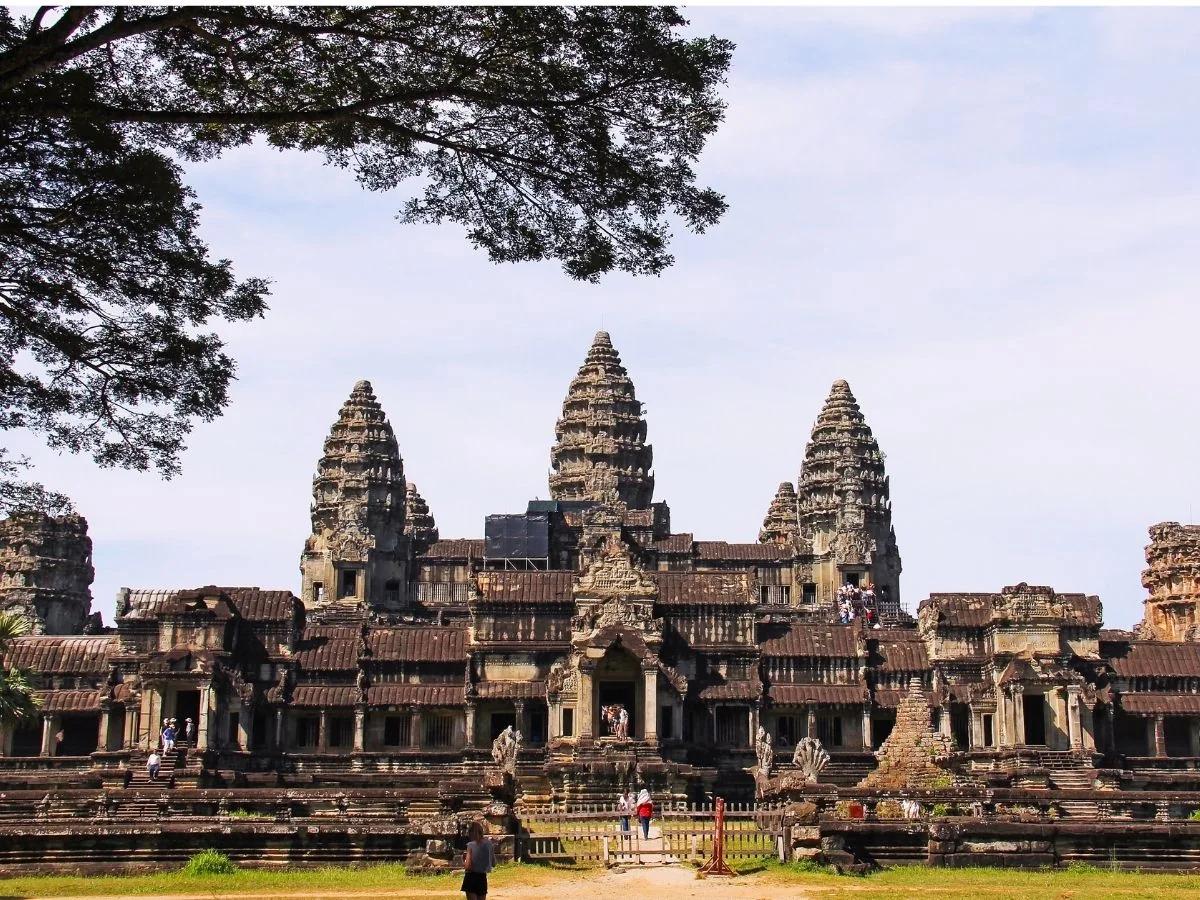
Cambodia's defining feature is Angkor, the vast archaeological park surrounding Siem Reap. At its heart sits Angkor Wat, recognised by Guinness World Records as the largest religious monument on earth, covering roughly 160 hectares of temples, causeways and moats. Built in the twelfth century as a Hindu temple before becoming a Buddhist site, it remains the spiritual and architectural core of the wider Angkor complex, which spreads across more than a thousand individual structures hidden among the forest. Nearby, the jungle-swallowed ruins of Ta Prohm sit alongside Angkor Thom, whose carved stone faces and moat-ringed walls rank among the site's most iconic temples, and a quiet evening boat ride around that moat is a peaceful way to see them away from the daytime crowds.
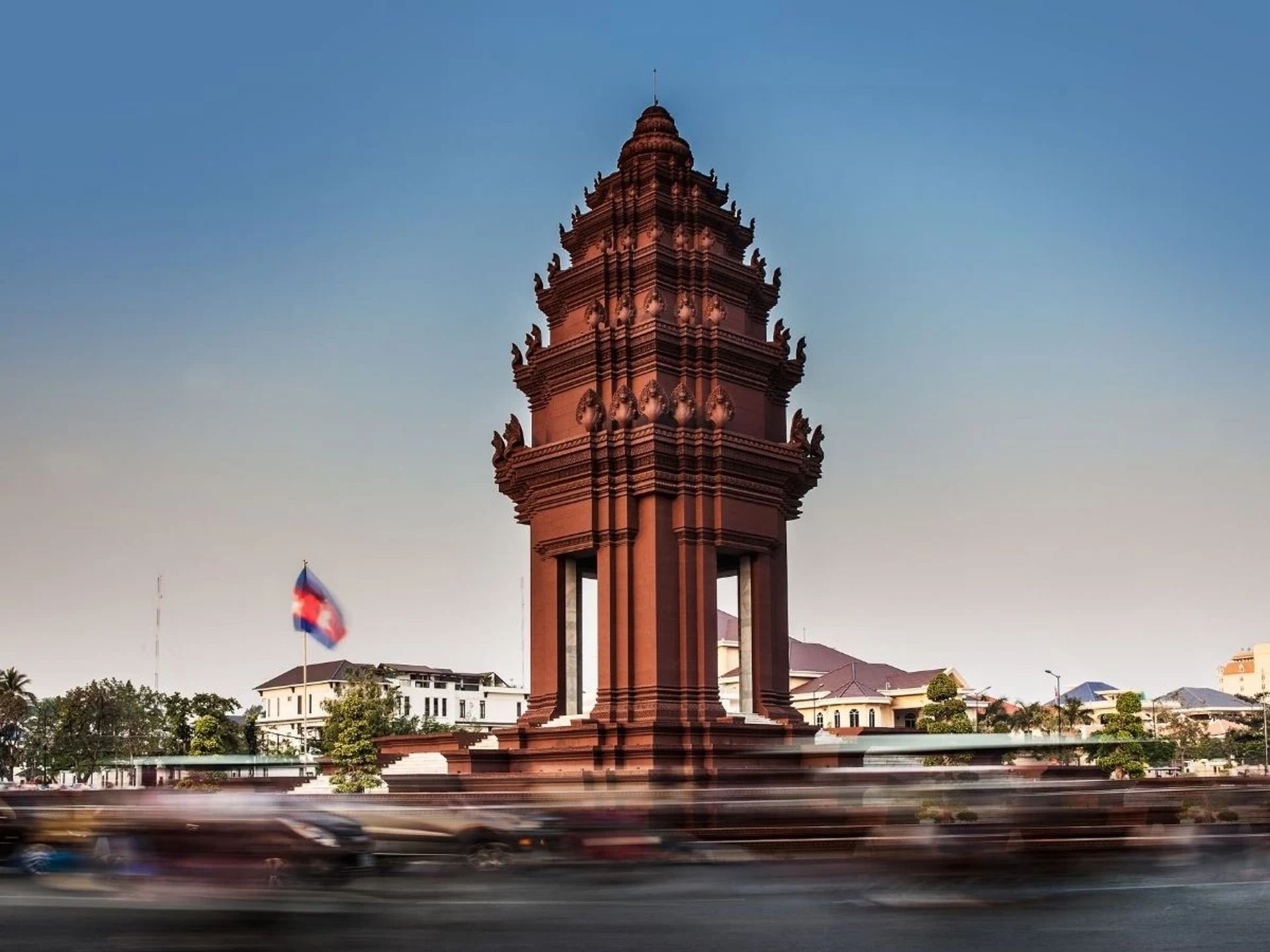
Beyond Angkor, Cambodia carries a heavier, more recent history. In Phnom Penh, the Tuol Sleng Genocide Museum and the Choeung Ek Killing Fields tell the story of the Khmer Rouge era with unflinching honesty. It is not always easy travel, but it gives real depth to a visit, and most travellers come away with a far richer understanding of the country because of it. The city's Royal Palace and adjoining Silver Pagoda, named for the five thousand silver tiles covering its floor, offer a very different, more celebratory side of Phnom Penh's history.
Beyond the Temples
Cambodia has quieter corners too. Battambang, a few hours from Siem Reap, offers a slower, rural side of the country away from Cambodia's headline attractions, complete with a bamboo train built on old French rail tracks and a countryside dotted with small villages making rice paper and fish paste by hand. Further south, the Cardamom Mountains hide dense jungle and a genuine sense of wilderness, while the coastal towns of Kep and Kampot offer a completely different pace, with fresh seafood, pepper plantations, and rivers made for a lazy afternoon swim.
Siem Reap's Living Culture
History in Cambodia is not confined to ruins and memorials. Near Siem Reap, the Cambodia Land Mine Museum doubles as a school and clinic for landmine victims, run by a former child soldier who has spent his adult life clearing the mines he was once forced to lay. It is a difficult but important stop, and one that shows how the country has channelled a painful past into practical, ongoing work. For something lighter, Phare Ponleu Selpak, often called the Cambodian circus, blends acrobatics with traditional and contemporary Khmer storytelling, and profits from performances in Siem Reap and Battambang go directly back into training local children in the arts. Siem Reap itself has grown into a comfortable base for all this, with a good range of hotels within easy reach of the temples. Just north of town, the sandstone plateau of Phnom Kulen adds another layer again. Regarded as the birthplace of the ancient Khmer Empire, it holds carved riverbeds, a waterfall, and quiet forest trails that see a fraction of the visitors that Angkor does.
Laos at a Glance
The Mekong, Luang Prabang and a Slower Pace
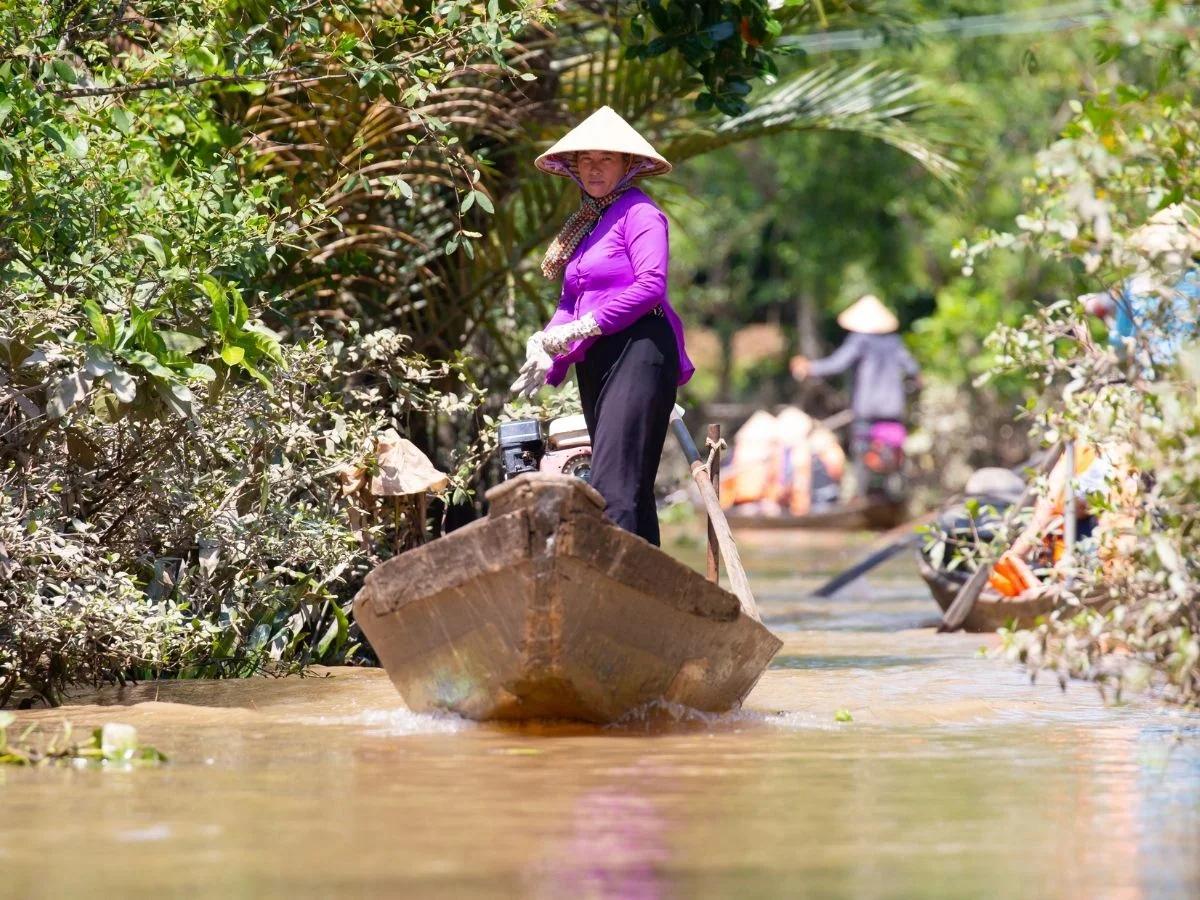
Where Cambodia builds a trip around monuments, Laos builds one around landscape and rhythm. The Mekong River runs through the country like a spine, and a two-day Mekong cruise downstream, from the northern border town of Huay Xai to the former royal capital of Luang Prabang, is one of the most memorable journeys in the region. Along the way, the boat stops at the Pak Ou Caves, an ancient pilgrimage site holding thousands of gold-lacquered Buddha images left there over centuries. Luang Prabang itself blends gleaming temple roofs with crumbling French colonial architecture, and mornings there often begin with the quiet procession of monks collecting alms along the main street.
Further south, the volcanic Bolaven Plateau is home to waterfalls, coffee plantations, and highland scenery formed by an ancient super volcano. The tour continues down to the 4000 Islands, known locally as Si Phan Don, where the Mekong spreads to around fourteen kilometres wide around a scatter of small, tranquil islands, long before the same river eventually reaches the sea through Vietnam's Mekong Delta, hundreds of kilometres further south.
Hill Tribes and the Far North
Northern Laos, particularly the region around Luang Namtha, is one of the most ethnically diverse parts of the country. Villages belonging to the Akha, Hmong, Khmu and Lanten people sit within reach of gentle jungle walks, and travellers often have the chance to observe traditional weaving, bamboo paper making, and other customs that have barely changed in generations, often welcomed with the warm hospitality that Laos is known for. It is this kind of unhurried, off the beaten track experience that gives Laos its reputation as one of the region's quieter, less developed destinations. Cambodia currently receives significantly more international visitors each year than Laos, a gap driven partly by more limited flight connections into Laos, which helps explain why it still feels so undiscovered.
Food, Craft and Everyday Traditions
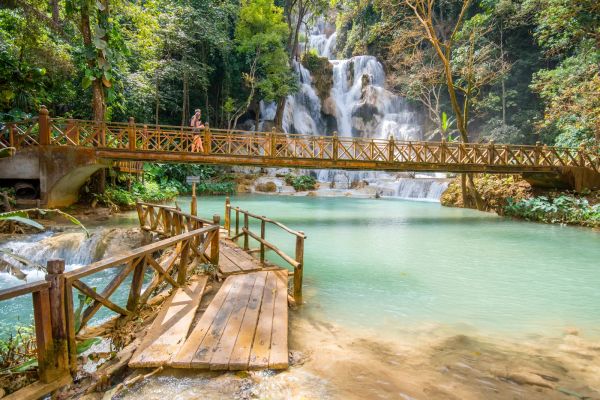
Much of what makes Laos memorable happens away from any single landmark. In Luang Prabang, a morning spent at the fresh food market followed by a simple cooking lesson in a family home gives a far better introduction to Lao cuisine, built around sticky rice, river fish and fresh herbs, than any restaurant meal could. Many visitors are also invited to take part in a Baci ceremony, a village blessing ritual in which cotton cords are tied gently around the wrists to wish good luck and good health for the journey ahead. Elsewhere, the waterfalls of Kuang Si near Luang Prabang combine turquoise pools with a nearby sanctuary for rescued sun bears, while the Vientiane-based COPE Visitor Centre gives a sobering account of the Secret War that left Laos the most heavily bombed country per capita in history. Together, these smaller stops build a picture of Laos that goes well beyond its landscapes alone.
Cambodia or Laos: Comparing Two Very Different Destinations
For Temple and History Lovers
If your idea of a great trip revolves around ancient architecture and a strong sense of history, Cambodia is the stronger pull. Angkor alone could fill several days, and the layered, difficult history of Phnom Penh adds a dimension that few destinations in the region can match.
For Nature, Rivers and an Off the Beaten Track Trip
If you are drawn more to landscape, slower travel, and cultural immersion in small communities, Laos tends to be the better fit. Its rivers, plateaus, and hill tribe regions suit travellers who enjoy nature and do not mind a more relaxed pace with fewer big-name sights.
For Food, Craft and Wildlife Lovers
This is one area where the two countries overlap more than they compete. Cambodia's strength lies in its living arts scene, from the Phare circus to village crafts around Battambang, alongside conservation-minded stops such as the Cambodia Land Mine Museum. Laos leans more towards hands-on experiences: a private cooking class in a family home, a Baci blessing ceremony, or an afternoon at the Kuang Si sun bear sanctuary. Neither country does this better than the other so much as differently, which is precisely why travellers who care about food, craft and wildlife often end up wanting a taste of both.
Holiday Practicalities: Visas, Seasons and Flights
Both countries share a similar climate pattern, with a dry season from roughly November to April that suits most travel plans, and a wetter season for the rest of the year. British nationals need a visa for both Cambodia and Laos, though both can typically be arranged in advance as an e-visa or as a visa on arrival at the main airports, depending on your entry point.
Getting there usually means flying via a regional hub such as Bangkok, in Thailand, with onward connections to either country, a common route for a Laos holiday, a Cambodia trip, or both together. Regional carriers such as Vietnam Airlines cover many of these routes, and a joined-up trip typically starts in Laos and ends by departing from Phnom Penh Airport, though the reverse works just as well. Independent travellers can also cross overland between the two countries via land border crossings in the south, though most guided itineraries use the short regional flight between Pakse and Siem Reap instead, which saves the best part of a day.
Why You Might Not Have to Choose: Small Group Tours That Link Both Countries
A Natural Overland Route Through South East Asia
Here is the part most comparisons miss. Laos and Cambodia are not just neighbours on a map, they connect naturally as a single journey. A well-planned route can begin in Vientiane or Luang Prabang, travel south through the Bolaven Plateau and the 4000 Islands, then continue directly into Cambodia with a short flight to Siem Reap from Pakse, taking around an hour. From there, the trip can continue on to Battambang, the Cardamom Mountains, the coast at Kep, and finally Phnom Penh. It is a logical, unbroken line rather than two separate holidays bolted together. Travellers wanting a few extra days by the sea sometimes extend their own trip afterwards with a short, more indulgent luxury holiday in Sihanoukville, trading tented camps and guesthouses for a beach resort before flying home.
What a Combined Itinerary Actually Looks Like
In practice, a route like this tends to fall into two clear halves. The Laos leg starts in Vientiane before heading north to the hill tribe region around Luang Namtha, then follows the Mekong south by slow boat to Luang Prabang. From there, the journey continues to the Bolaven Plateau for coffee, waterfalls and highland scenery, before finishing the Laos side of the trip among the calm channels of the 4000 Islands. The short flight from Pakse into Siem Reap marks the shift into Cambodia, opening with several days exploring the Angkor temples, including sunrise visits and quieter back routes away from the main crowds. The route then continues overland through Battambang's rural villages, into the jungle and tented camps of the Cardamom Mountains, along the coast at Kep, and finally into Phnom Penh, where the trip closes with a sunset river cruise along the Tonle Sap and Mekong. Covering both countries this way, over roughly a month, allows each destination the time it deserves, rather than rushing through either one.
Shared History: From Vientiane to Phnom Penh
The connection runs deeper than geography. Both countries share a French colonial past, visible in the architecture of Vientiane and Phnom Penh alike, and both were shaped profoundly by the wider Indochina war of the twentieth century. Buddhism sits at the centre of daily life in both places too, though it expresses itself differently, from the alms-giving ritual in Luang Prabang to the temple culture around Angkor. Seeing both countries back to back gives a far fuller picture of this shared regional story than visiting either one alone.
Conclusion
Cambodia and Laos each stand well enough on their own. Cambodia offers scale, history and some of the most remarkable temples on earth. Laos offers rivers, mountains and a slower, more intimate way of travelling. But together, they tell a richer story about South East Asia than either can alone, and the route between them is far more natural than most travellers expect.
Undiscovered Destinations runs small group tours that trace exactly this route, following the Mekong south through Laos before crossing into Angkor and on through Cambodia, with no compulsory single supplement for those travelling solo. So stop weighing up Cambodia or Laos, and start planning the trip that lets you wake up in both.